
The Recovery Program
“Give me a place to stand, and a lever long enough, and I will move the world.”
~Archimedes
A Brief History
Real change requires two things: solid ground and real leverage. After more than twenty years leading men’s groups, one thing has become clear to me: every effective recovery group requires both connection and content. Connection provides the ground. Structure provides the leverage.
If a group leans too heavily toward connection without shared learning, it eventually loses traction. Conversations circle. Progress stalls. Men feel supported, but they are not necessarily growing. On the other hand, if a group leans too heavily toward content without relational depth, it becomes information without transformation. Men learn concepts, but there is little embodied integration, little vulnerability, and little relational repair.
Real recovery requires both. It requires understanding and application. Structure and brotherhood. Insight and intimacy.
For many years, I attempted to hold both content and connection inside a single 90-minute weekly group. Over time, it became clear that there was simply too much material to cover and too much relational depth to honor. Trying to force everything into one space limited both sides of the process. Men needed more room to process honestly, and they also needed more structured teaching than one 90-minute group a week could responsibly provide.
That realization led to a shift. Instead of compressing everything into a single weekly meeting, Breath to Bones now offers multiple groups throughout the week, allowing men to engage both connection and content more fully. This creates flexibility for men to work on the specific areas they need at each stage of their recovery journey. Some need foundational work on honesty and stabilization. Others are ready for deeper attachment repair, intimacy work, or advanced relational skill building. By expanding access to Content Groups alongside consistent Connection Groups, men receive a broader spectrum of care without losing relational depth.
The result functions much like an online intensive outpatient program. Men have access to structured teaching, guided application, peer accountability, and consistent relational support, all integrated into one cohesive system. They receive full spectrum recovery care from their own home, at a fraction of the cost of traditional inpatient or intensive outpatient treatment, while remaining embedded in their real lives, marriages, and responsibilities.
Recovery is not just information transfer. It is embodied learning inside relationship. That is why both content and connection are essential.
The Program
Connection Groups:
The Relational Core
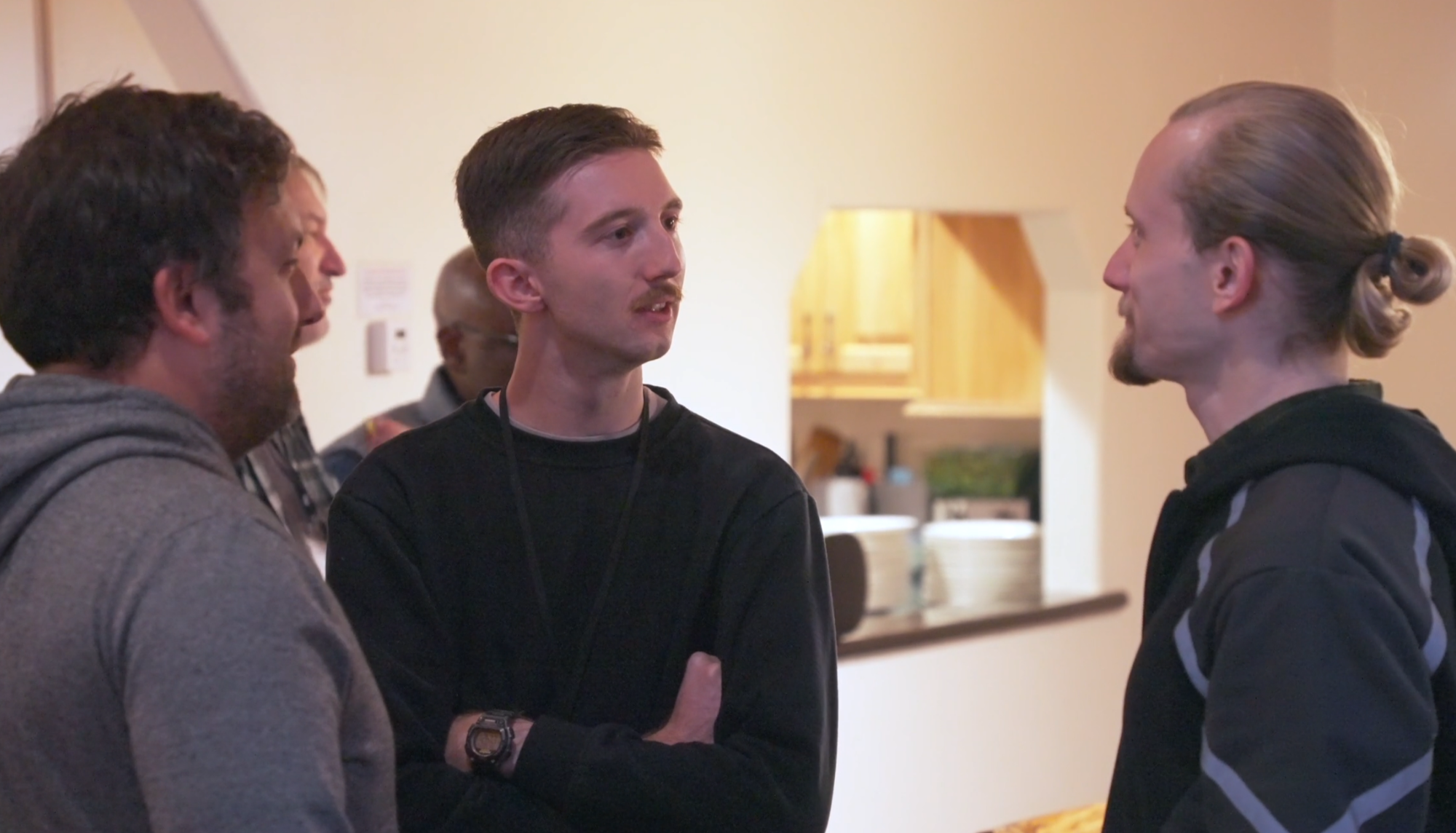
Weekly small groups of 10 to 12 men meeting for 90-minutes. This is where transformation actually happens.
90-minute structured process groups facilitated by trained and supervised Breath to Bones coaches
Go deep with men walking the same path
Practice rigorous honesty, empathy, vulnerability
Content Groups:
Clinical Teaching and Skill Building
Weekly large group teaching environments focused on specific recovery tools and exercises.
Unlimited access each week
Recovery stage specific (early, intermediate, advanced)
Learn, apply, and practice robust clinical systems and tools
REP Groups:
Daily Consistency + Regulation
Short, structured rhythm groups that reinforce daily habits, nervous system regulation, and recovery discipline.
30-minute format, high frequency meetings
Reinforce daily disciplines and sobriety commitments
Practice consistency and follow through
Daily gratitudes, affirmations, goals, commitments
Relay Recovery App
Your Daily Recovery Command Center
Relay is not just another sobriety tracker. It is the central nervous system of your recovery.
Built specifically for structured, relational recovery, Relay gives you daily accountability, emotional awareness tools, group connection, and measurable progress in one secure platform. This is where your commitments live. Where your check-ins happen. Where brotherhood becomes visible.

Optional: In-Person Intensives
Four day, highly immersive and embodied learning environments designed for deep work and accelerated nervous system training.
These are not side events. They are themed directly in alignment with the quarterly group curriculum, but at 10x the depth and immersion.
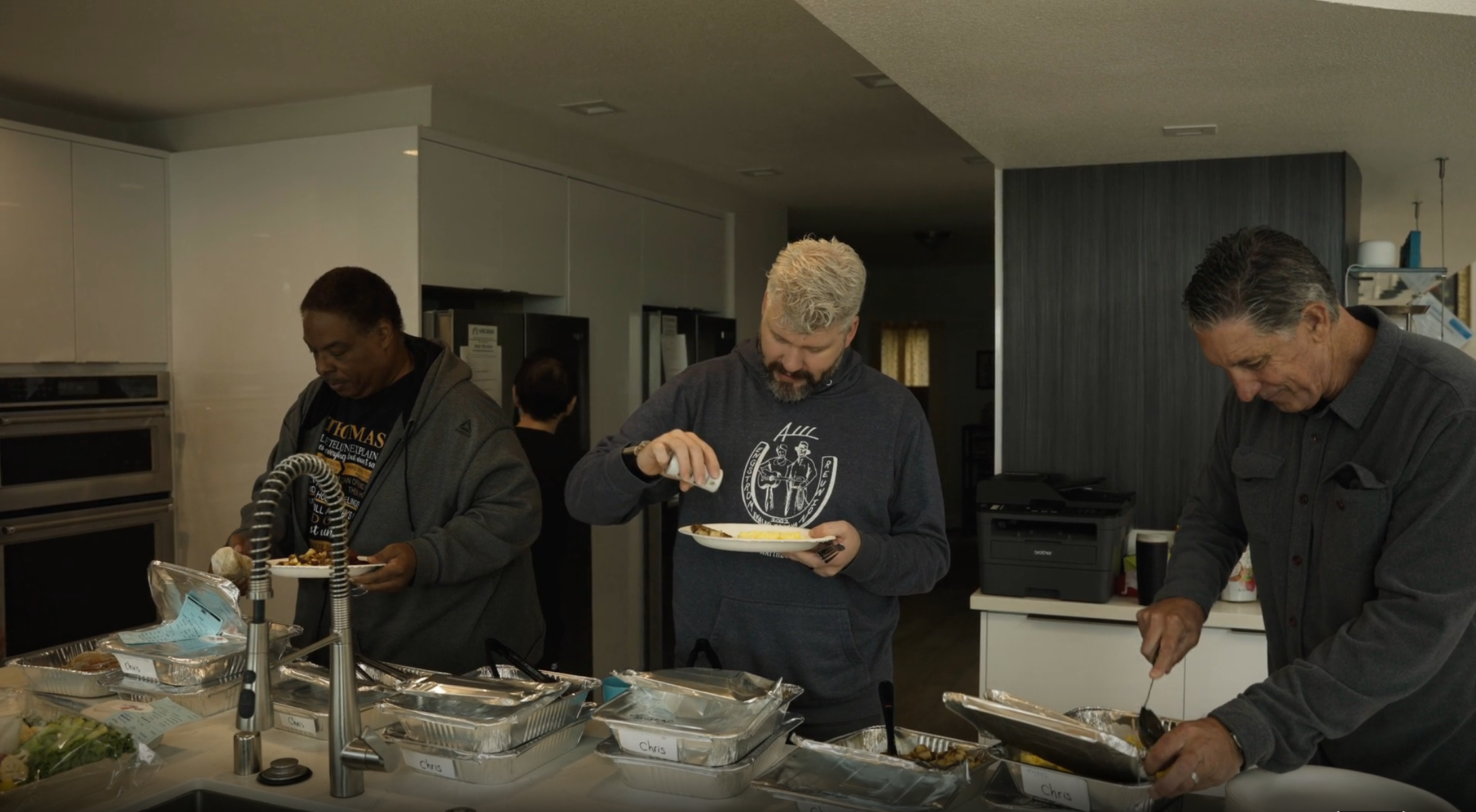
Optional: In-Person Breakfasts
Monthly in person gatherings in select cities to deepen connection and strengthen trust.
“The opposite of addiction is not sobriety, it’s connection.”
~ Johann Hari
Connection Groups
Where Brotherhood Becomes Real and Recovery Begins
Connection Groups are the relational core of Breath to Bones. These are small, consistent groups of 10 to 12 men who meet weekly for 90 minutes. Over time, something rare begins to form. Not just familiarity and accountability. But genuine trust and intimacy. This is where isolation is replaced with rigorous honesty, where transparency becomes normal, and where empathy, attunement, and real intimacy are practiced in real time. Patterns are named. Defenses are challenged. Emotions are expressed instead of managed through behavior.
Every group begins the same way. A short devotional reading and prayer. A reminder that this work is not just behavioral but spiritual. In every way we begin by receiving the breath of God as the source of our healing and transformation . Then we move into the curriculum. Men reflect on what they read that week, what stirred in them, what challenged them, what they resisted. Homework becomes conversation. Tools become personal. The content is not studied as theory. It is processed through real lives.
Connection Groups are the practice arena. This is where you rep the skills of confession, listening, accountability, and emotional presence in a structured environment. It is far easier to learn how to tell the truth, tolerate vulnerability, and stay regulated with a group of committed men than it is in the heat of conflict with a spouse or in high stakes environments where far more is on the line.
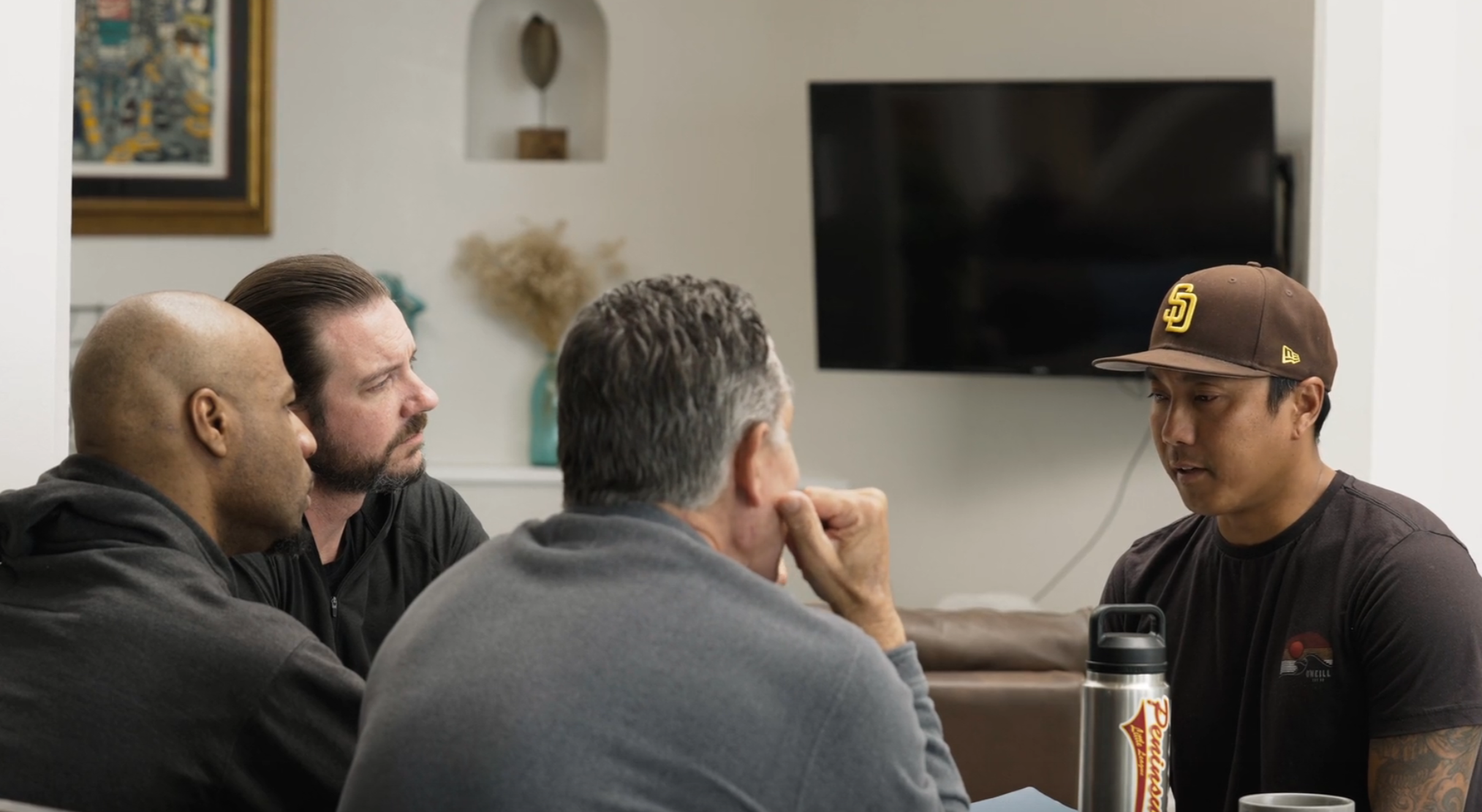
This is where transformation accelerates. When a man risks honesty and discovers he is not rejected. When he is seen and stays present.
These groups become more than meetings. They become formative relationships. Men have stood in each other’s weddings. Gathered at funerals. Remained close friends seven years after leaving group. When a member transitions out, there is real grief. When a new man joins, there is intentional welcome. Each group becomes a living organism. Growing. Changing. Deepening.
For many men, this is the first place they have ever been fully known and loved.
Content Groups
Structured Training for Every Stage of Recovery
Alongside Connection Groups are Content Groups. These sessions are more structured and instructional. We walk through the curriculum together, mapping patterns, understanding triggers, building emotional awareness, and strengthening practical recovery skills. You are not left to figure this out on your own. There is a clear pathway.
These 60-minute, stage-specific groups provide structured teaching and guided application rooted in the Relational Recovery System, as well as the latest neuroscience, attachment research, and clinically proven recovery models. Each group follows a focused rotation, most in 12 week cycles, with deeper tracks such as Recovery Zone running six months to allow for more intensive integration.
These are not primarily lecture or information sharing. These are skills training.
Men are grouped according to stage of recovery so that the material meets them where they are. Early recovery focuses on stabilization and foundational tools. Intermediate recovery deepens into trauma, attachment, and identity work. Long term recovery shifts toward leadership, legacy, and generational impact.
Across all stages, the goal remains the same: repetition, integration, and embodied change.
Information and insight are not enough. Recovery requires training.
Examples of Current Content Groups
• Recovery Basics
• First Step Group
• Full Disclosure Group
• Intermediate Recovery – Recovery Zone Volume 1
• Advanced Recovery – Recovery Zone Volume 2
• Internal Family Systems
• Polyvagal Theory and Nervous System Regulation
• Family of Origin and Life History Mapping
• Relational Intimacy, Empathy, and Attunement
REP Groups
Daily and Weekly Integration
Change happens in repetition. Recovery does not happen in one session per week, so we build in a daily and weekly Recovery Rhythm. This includes guided reflection, personal work, and consistent practices that reinforce what you are learning in group. Recovery becomes something you live, not something you attend.
Recovery Rhythm Groups provide structured daily and weekly touchpoints to reinforce nervous system regulation, accountability, and focused practice. These rhythms turn recovery from a meeting into a lifestyle.
Daily 30/30
A focused 30 minute morning reset to ground, regulate, and recommit to recovery for the day ahead.
Weekly R.A.P. Review
A structured weekly assessment space to evaluate progress, identify patterns, and recalibrate for the week ahead.
The Recovery Library
Learning the Tools of the Program
Between sessions, growth continues.
Members have access to a robust and growing digital library of structured lessons, exercises, worksheets, and guided teachings that reinforce the Relational Recovery System.
• Video teachings from the full curriculum
• Guided exercises and mapping tools
• Arousal template frameworks
• Trauma and attachment assessments
• Ongoing integration resources
This is not random content.
It is a curated, progressive training system.