About Breath to Bones
For more than twenty years as a licensed mental health counselor, I have worked with men in both individual and group therapy settings. Over that time I observed one consistent pattern: Men heal faster and more deeply in community.
In early 2025, I sensed God calling me back to a vision that has marked my entire career: Ezekiel 37 and the valley of dry bones. What became clear to me was not a new idea, but a decisive pivot. It was the decision to move fully into structured online group work and build not just separate weekly recovery groups, but an integrated training community and curriculum where men learn together, grow together, and change together.
Breath to Bones is a structured, relational recovery community for men who are tired of isolation and secrecy and ready for transformation. Many of the men who come here are successful on the outside but struggling privately with compulsive behaviors, fractured intimacy, and spiritual disconnection. We believe recovery requires more than insight or willpower. Lasting change happens when men are given clear structure, practical tools, and courageous brotherhood where honesty and connection are practiced consistently over time.
Our work integrates neuroscience informed research and proven clinical frameworks, building on the contributions of leaders such as Patrick Carnes, Dan Siegel, Gabor Maté, Bessel van der Kolk, Richard Schwartz, and others. We focus on interrupting destructive behaviors, stabilizing the nervous system, renewing the mind, and restoring relational and spiritual intimacy. This is not passive talk therapy. It is rigorous training. Men learn to regulate, reflect, map their patterns, and build new relational capacities in real time with other men doing the same work.
At its core, Breath to Bones rests on a simple truth: men in dark places need other men. They also need tools, structure, and light to walk out. Scripture says breath entered the bones and they came to life. Men do not come alive in isolation. They come alive in connection, in truth, and in community. Breath to Bones exists to help men rise from places that once felt dead and rebuild lives marked by integrity, courage, and real intimacy with God and others.
About Chris Chandler
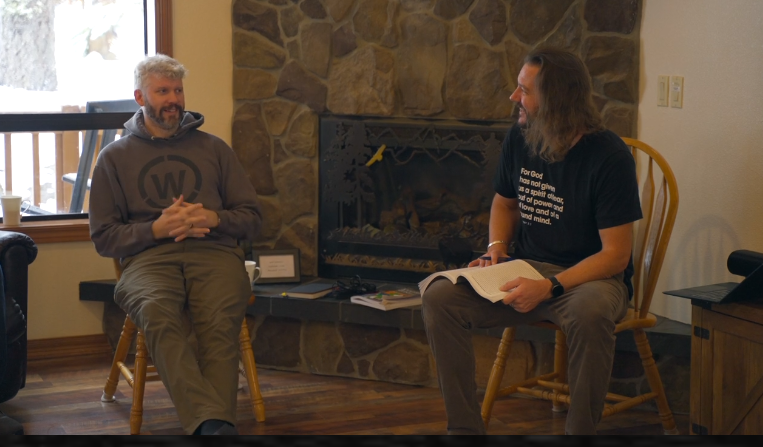
Chris Chandler, LMHC, LPCC, CSAT-S, EMDR, is a licensed therapist, coach, and Clinical Advisor at Relay Health, as well as the founder of Christian Recovery Groups LLC and the Breath to Bones movement. His work sits at the intersection of neuroscience, attachment, faith, and relational systems, helping men heal from compulsive behaviors and reclaim lives marked by integrity, connection, and purpose.
Early in his career, Chris trained directly under Dr. Patrick Carnes, a pioneer in the field of compulsive behavior and sexual addiction treatment. He later partnered with Dr. Carnes as one of six research investigators in the groundbreaking Fulbright Study, which explored explored genetic elements to problematic sexual behavior. This work deeply shaped Chris’s passion for understanding how the brain adapts to trauma, attachment wounds, and compulsive patterns, and how lasting recovery requires intentional brain change over time, not just insight or behavior management.
For over 20 years, Chris has worked with individuals and groups, guiding them toward restored relationships with God, themselves, their families, and their communities. His approach integrates neuroscience-informed practices, systems thinking, and relational attachment work, grounded in the belief that healing accelerates in safe, honest, and structured community.
Chris is especially passionate about helping men understand the emotional and relational drivers beneath their compulsive behaviors and about creating environments where brotherhood, accountability, and courage can take root. He believes real change does not come through willpower alone, but through renewed thinking, embodied practices, and secure relational connection.
At the heart of Chris’s work is a simple conviction: recovery is not about becoming someone new, but about recovering who you were created to be. His leadership is shaped as much by his own recovery journey as by his clinical training, and he brings a grounded, direct, and compassionate presence to every space he leads.